Business comics: costs and production process
What affects the cost of a business comic, how production works, and what to prepare before asking for an estimate.
A business comic can explain a complex service, show how a customer’s situation changes, or make recruitment and training material easier to follow. The cost depends on more than page count: planning, writing, characters, colour, drawing detail and intended use all shape the scope.
What affects the estimate
- Page and panel count
- Black-and-white or colour artwork
- Planning, interviews and scriptwriting
- Character design and number of characters
- Detail in backgrounds, products and reference material
- Use on websites, social media, advertisements or in print
- Translation, vertical layouts or animation versions
An existing script still needs to be adapted for comics. We consider how the reader follows the story, where questions arise, and what the final takeaway should be. This determines the roles of dialogue and images. Planning and structure are part of the scope when they are commissioned.
The production process
- Confirm the objective, audience and publishing channels
- Organise the information, plot and script
- Agree on characters and visual direction
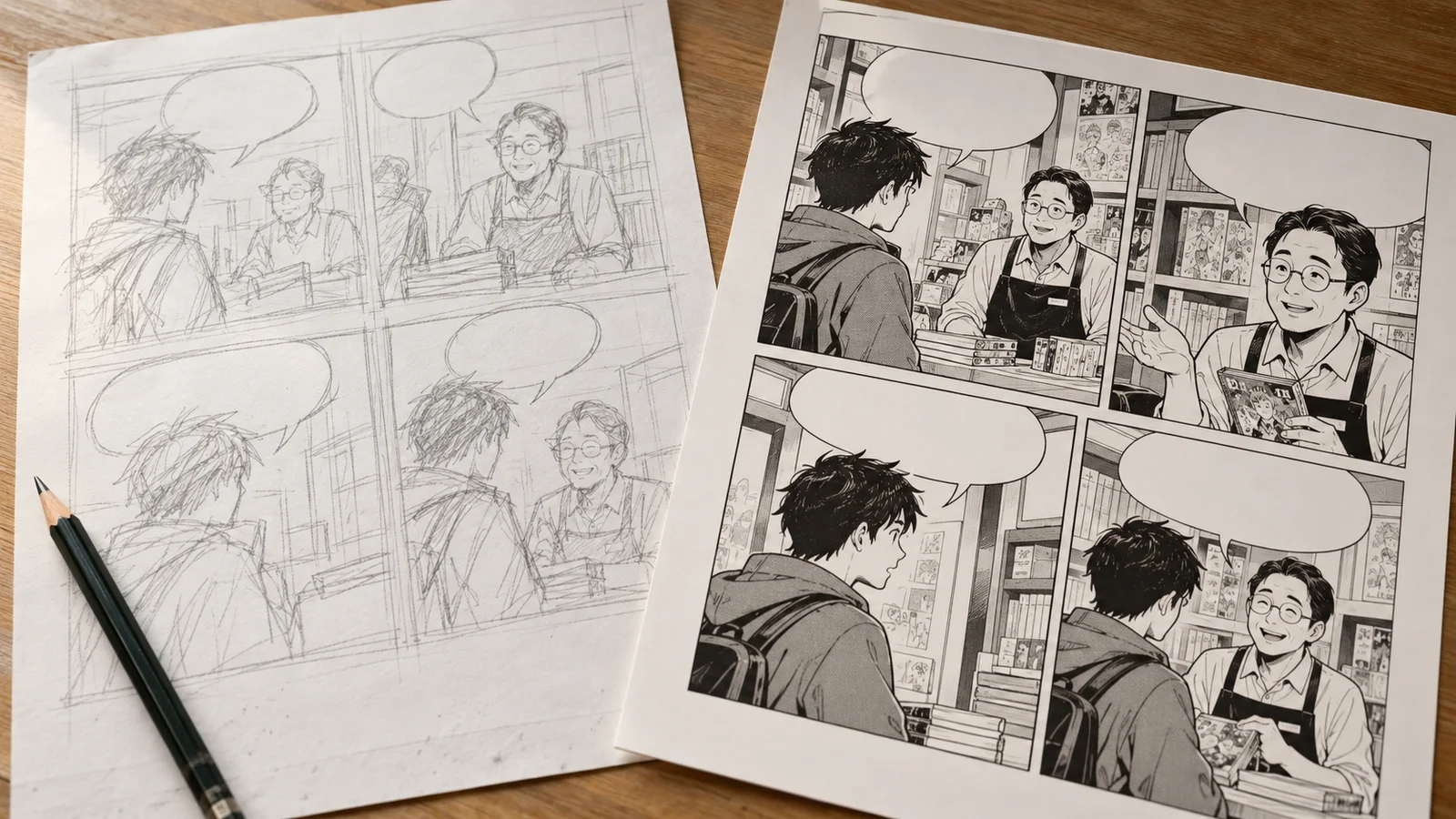
- Review panel layouts and dialogue in a rough storyboard
- Develop sketches, inked artwork and colour
- Finish lettering, speech balloons and page design
- Proofread and export files for each use
Review the story before final artwork
Changing the structure or dialogue after the artwork is complete can mean redrawing several panels. It is more efficient to involve everyone who approves the content at the rough-layout stage. Later reviews can then focus on expressions, colour and details. Agree who makes the final decision before production begins.
Planning the schedule
Even a short comic needs time for the brief, rough layouts, drawing and review. A four-page comic with a prepared script may use three to five weeks as an initial planning reference, not a guaranteed delivery time. Interviews, additional pages, colour or complex backgrounds can require more time. Confirm the actual schedule for your project.
What to prepare
- The problem the comic should help solve
- The intended readers and publishing channels
- Essential information and expressions to avoid
- Reference material, product photos and existing characters
- Preferred page count, colour and size
- Launch or print dates and internal review steps
- Any planned animation or web versions
KENIKO can handle planning, scripts, rough layouts, artwork and design as one process, with related illustration, animation and web work developed around the same visual world.